
They indicate the adequacy of a company’s cash flow to pay its debts and other obligations. Market ratios are metrics used by investors to evaluate and compare stocks within an industry or sector. These ratios allow investors to identify under or overvalued stocks and assess financial health.
Why are financial ratios important?
By comparing their ratios with those of competitors or industry averages, businesses can identify areas where they excel or lag behind. This benchmarking process is vital for identifying competitive advantages and areas needing improvement, ultimately aiding in strategic planning and performance enhancement. Ratio analysis also helps a firm to compare its current year’s performance with the previous year’s performance to identify areas of improvement and best achievements.
What is Accounts Payable Turnover?
- After calculating these ratios, compare with benchmarks or with competitors to assess a company’s liquidity position and its ability to meet short-term debt obligations.
- Even if the company earns much higher sales in the current period than last year, it may not generate the same profitability.
- By analyzing coverage ratios such as the interest coverage ratio (ICR) and the debt service coverage ratio, you can assess your company’s ability to pay its debts and avoid financial distress.
- For instance, a high debt-to-equity ratio might be typical in capital-intensive industries like utilities but could signal risk in sectors like technology.
- That is because it relates the most liquid assets to current liabilities.
- For all earlier years, it is in excess of 200% (which seems highly unlikely).
Applying general benchmarks without considering these industry norms can lead to misinterpretations of a company’s financial health. For instance, a high debt-to-equity ratio might be typical in capital-intensive industries like utilities but could signal risk in sectors like technology. Accounting ratios are the quantifiable or numerical connection between two accounting data used to assess a company’s performance. Ratios are used to compare many aspects of a company, such as revenue, liquidity, solvency, and efficiency, and can be stated as a percentage, fraction, or decimal. Accounting ratios are those that are determined using financial data documented in a company’s financial statements. Ratio analysis is a quantitative method used to analyze the company’s data contained in financial statements.
- Cost of goods sold is usually the largest expense on the income statement of a company selling products or goods.
- Though comparisons of previous financial information might help in highlighting areas of success and failures but it is not sufficient to predict future business patterns.
- This not only saves time, it helps you gain broader insights to predict and improve performance.
- Chief among these ratios are the current ratio and quick ratio, which compare certain current assets to current liabilities.
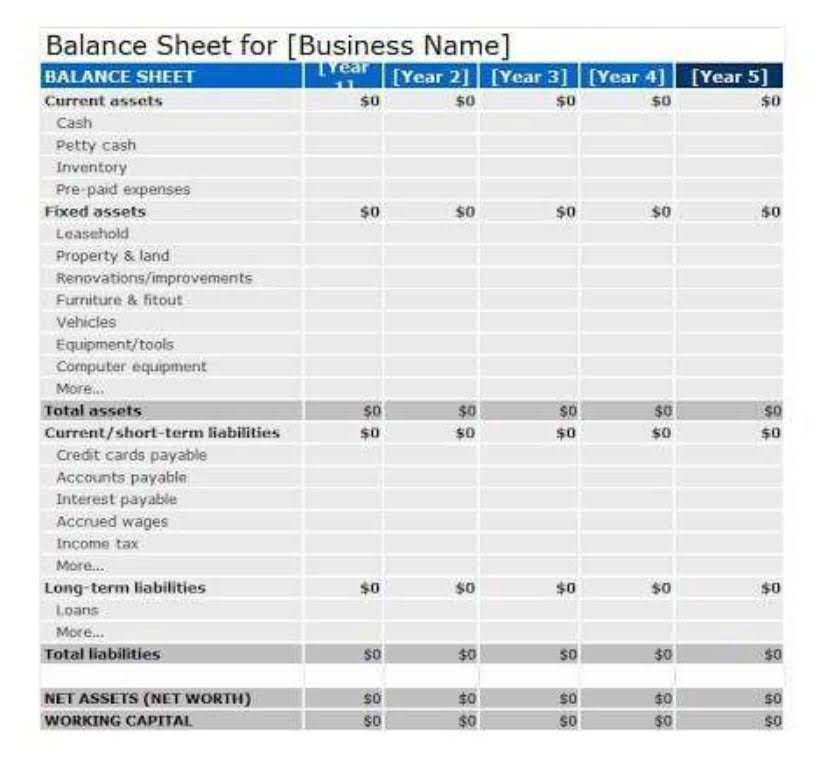
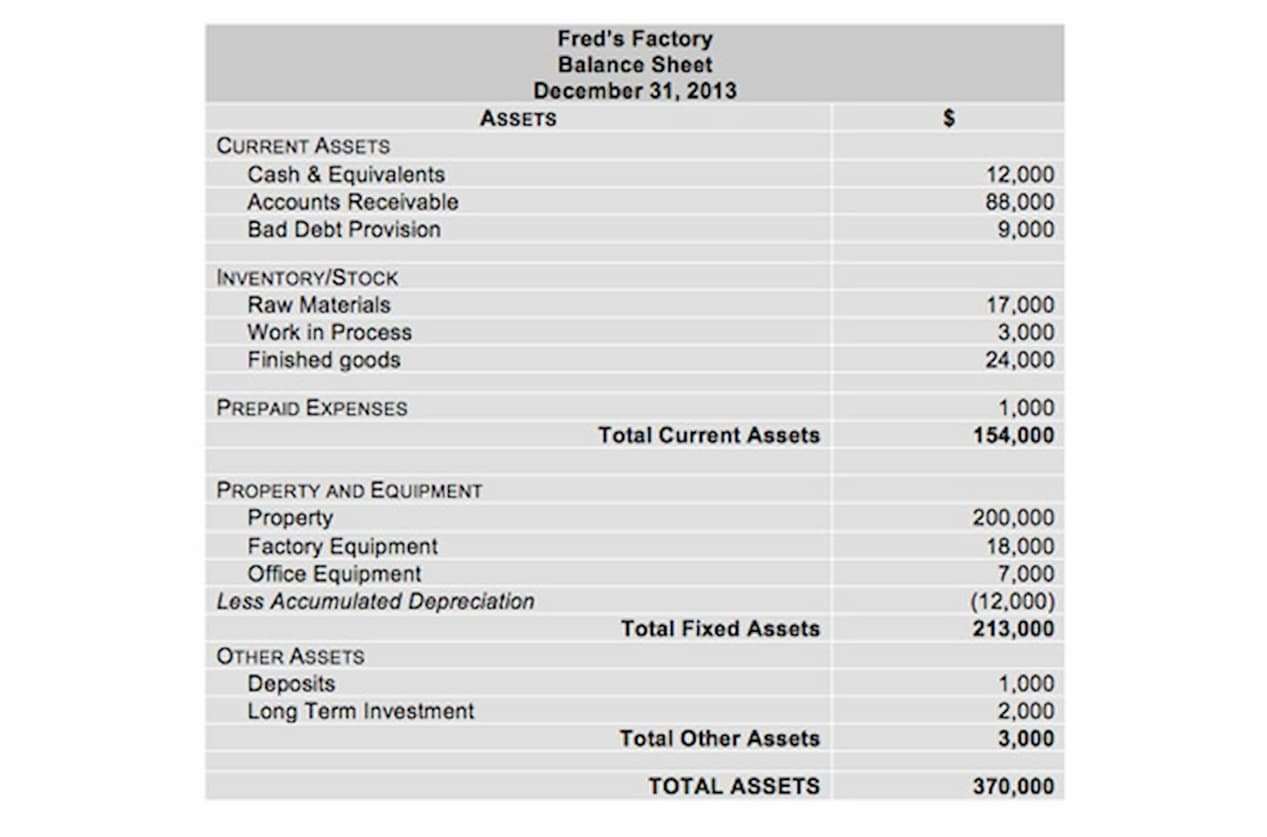
- The first section of the BS shows the current assets subsection (part of the Assets section).
Days sales outstanding (DSO)
BFL shall not be responsible or liable for any loss or shortfall incurred by the investors. There may be other/better alternatives to the investment avenues displayed by BFL. Hence, the final investment decision shall at https://vinagates.com.vn/2020/09/09/a-flexible-budget-may-be-prepared-select-one-a/ all times exclusively remain with the investor alone and BFL shall not be liable or responsible for any consequences thereof. By comparing a company’s ratios to industry benchmarks, historical trends, and competitors’ performance, you can understand which companies to pick and invest in.

- Or it happens because the company is having trouble collecting payments from customers.
- Price-to-earnings ratio or P/E ratio compares a company’sMarket price to its earnings per share.
- Days sales outstanding (DSO) measures the average number of days it takes a company to collect payment on its credit sales.
- We note that historically, Colgate’s Equity Turnover is negative or very high.
We begin our discussion of financial ratios with five financial ratios that are calculated from amounts reported on income summary a company’s balance sheet. Scenario and sensitivity analysis involves modeling different scenarios and assessing the impact of changes in key variables on your company’s financial performance. This allows you to assess your company’s risk exposure and identify potential areas of concern. Furthermore, ratio analysis allows companies to benchmark their performance against industry standards.


This analysis is commonly conducted by external analysts, as they rely on financial statements as their primary source of information. Explore Private Equity, a $4.7 trillion industry, with top faculty and industry experts from Wharton Online and Wall Street Prep and receive a certificate on completion of the course. Learn investment analysis, competitive evaluation, company analysis, and more. Gain expertise in private equity investing with our comprehensive certificate program, blending academic rigor with practical insights from industry leaders.
- From this calculation, we can see that the company has enough liquidity to cover its short-term liabilities completely with its current assets, though it’s relatively tight.
- Financial data required for ratio analysis can typically be found in a company’s financial statements, including the balance sheet, income statement, and cash flow statement.
- All income statement amounts are divided by the amount of net sales so that the income statement figures will become percentages of net sales.
- These ratios help in identifying operational strengths and weaknesses, allowing businesses to improve productivity and better manage resources for higher profitability.
- Financial ratio analysis often includes a mix of short-term and long-term performance indicators, but an overemphasis on short-term metrics can lead to a skewed perspective.
- It, therefore, does not address certain factors which can play a huge role in determining a company’s prospects.
- Valuation analysis involves determining your company’s intrinsic value based on its financial performance and other relevant factors.
Operating leverage is the percentage change in operating profit relative to sales. It measures how sensitive the operating income is to the what is financial ratio analysis change in revenues. The greater the use of fixed costs, the more significant the impact of a change in sales on a company’s operating income. Given below are some important formula that the company management and stakeholders use for analysis of financial ratios and company evaluation.
Leave a Reply